Why has response time become the number one conversion driver?
Because customers buy from the most responsive business, not the cheapest one. A prospect who asks a question rarely does so in just one place: they compare, reach out to several businesses at once, then buy from whoever answers clearly first. The data backs this up. According to the Oldroyd study (MIT Sloan / InsideSales.com, 2007), based on more than 15,000 leads and 100,000 contact attempts, calling a prospect within 5 minutes rather than 30 multiplies your odds of reaching them by 100 and your odds of qualifying them by 21. An analysis by the Harvard Business Review ("The Short Life of Online Sales Leads," 2011) points the same way: companies that respond within an hour are nearly 7 times more likely to qualify the lead than those that wait just one hour longer. Speed is no longer a service detail: it's a direct, measured and documented sales lever.
How long does a customer's window of intent last?
A few minutes, rarely more. When a customer messages you, they are in a moment of intent: they are thinking about you, right now. A few minutes later, they have moved on: another tab, another business, another task. Re-opening that window takes far more effort than seizing it right away: the Oldroyd study shows the odds of contact are already divided by five between 5 and 10 minutes of waiting. For a small or mid-sized business, the problem isn't a lack of willingness, but the impossibility of being available around the clock. You're in a meeting, on a job site, out on delivery, or simply off for the evening or weekend, precisely when customers message you most. The window of intent doesn't align with your opening hours, and that's where sales are won or lost.
What does a late reply really cost?
A late reply costs sales, reputation and time. Concretely, waiting comes at a price on three fronts:
- Lost sales: according to the Harvard Business Review (2011), companies take 42 hours on average to respond to an online enquiry, and nearly one in four never reply at all. In the meantime, the customer has already bought elsewhere.
- A damaged reputation: 82% of consumers consider a fast response, within 10 minutes or less, important when they contact a business (HubSpot Research). A message left unanswered for hours signals a business that can't be reached.
- Wasted time: re-engaging a prospect who has gone cold takes far more effort than replying the first time. The qualification gap reaches a factor of 60 between a reply within an hour and a reply after 24 hours (HBR, 2011).
The cost of a late reply shows up on no invoice, but it is very real and adds up every single day.
How can you reply in under a minute without replying poorly?
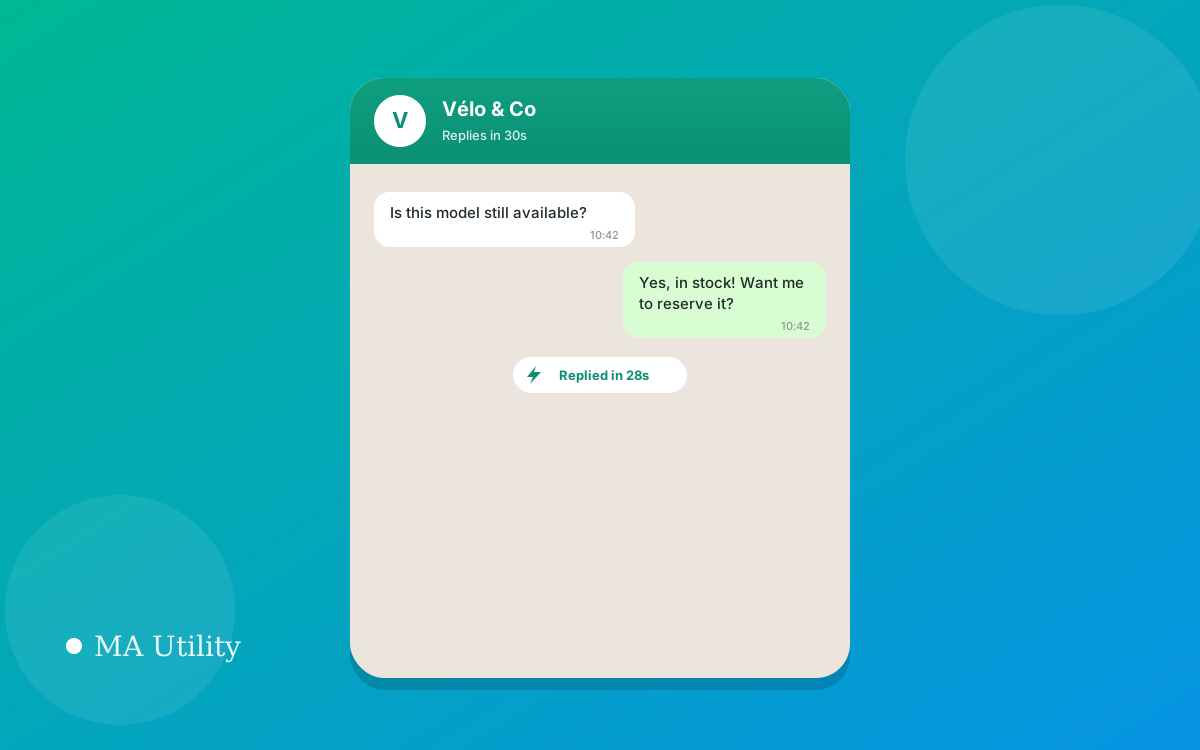
By automating the right answer, not a generic one. Replying fast doesn't mean replying poorly: the goal isn't to fire off an empty message in two seconds, but to deliver the right information immediately: product availability, an appointment slot, a quote, a support resolution. That's the role of an AI trained on your business. It reads the incoming message, understands the intent, and replies in your tone, at any hour, in the customer's language, whatever it may be (the AI handles every language). With MA Utility, the average response time drops to around 5 seconds, where a human reply is counted in minutes or hours. You stay in control of sensitive conversations and can step back in with a single click whenever needed. Your customer gets their answer in seconds, and that's often all that matters.
Do you have to be available 24/7 to never miss a thing?
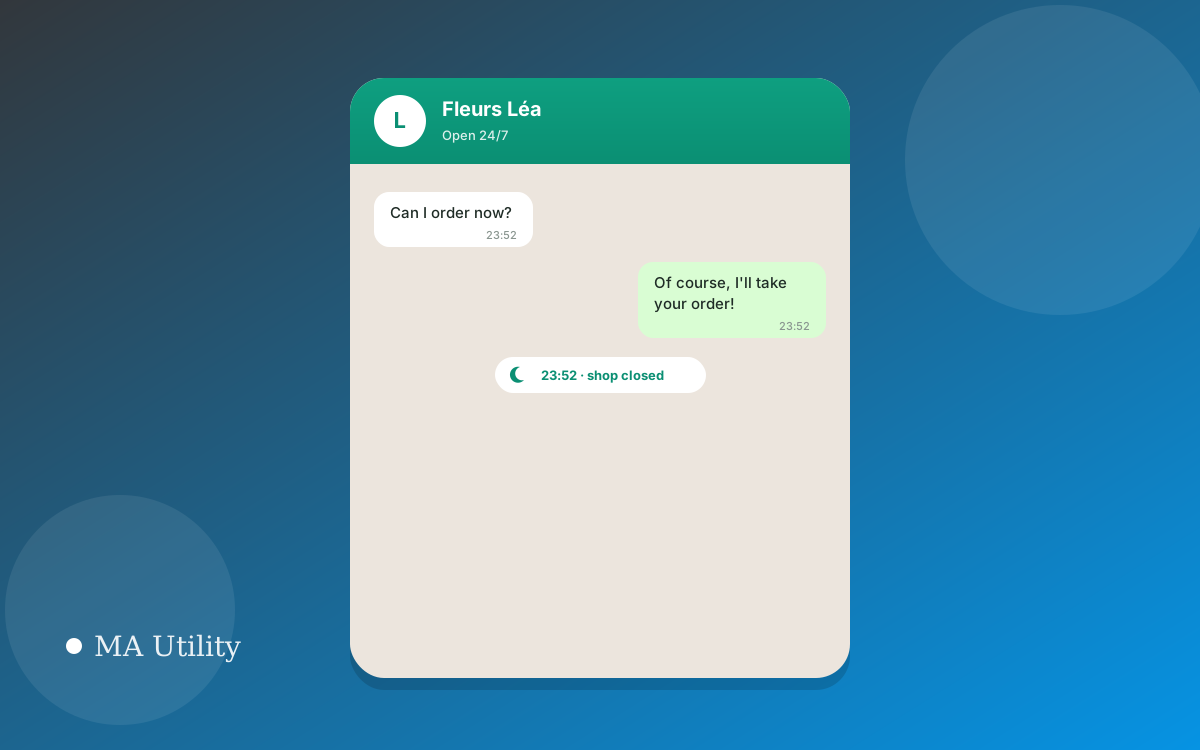
Yes, but without spending your nights on it. Your customers message in the evenings, on weekends and on public holidays, precisely when you can't reply yourself. Being available around the clock doesn't mean hiring a night shift: it means an AI takes over when you're unavailable, qualifies the request, answers common questions, schedules what it can, then hands the rest over to you for the next day. You turn "off" hours into sales opportunities, with no extra staffing cost. Round-the-clock availability becomes a competitive advantage within reach of a small business, where it was once reserved for large organizations with a contact center.
Frequently asked questions about customer response time
What is the ideal response time on WhatsApp or live chat?
Under 5 minutes ideally. 82% of consumers consider a fast response, within 10 minutes or less, important when they contact a business (HubSpot Research), and the odds of qualifying a prospect drop sharply beyond that. On messaging, instant replies have become the expected norm, not an exceptional effort.
Does an automated reply hurt the customer relationship?
No, as long as it's relevant. What damages the relationship is waiting and generic replies, not automation itself. An AI trained on your business replies in your tone with the right information, and hands over to a human as soon as the situation calls for it.
How can you reply at night and on weekends without hiring?
By letting an AI take over outside your hours. It handles common requests around the clock and passes complex cases to you for the next day, with no extra staffing cost and no drop in service quality.
Does replying faster really increase sales?
The studies converge: 7 times more likely to qualify a lead by responding within the hour (HBR, 2011), and 100 times more likely to reach them by reacting within 5 minutes rather than 30 (Oldroyd, 2007). Responsiveness is one of the best-documented conversion levers to date.